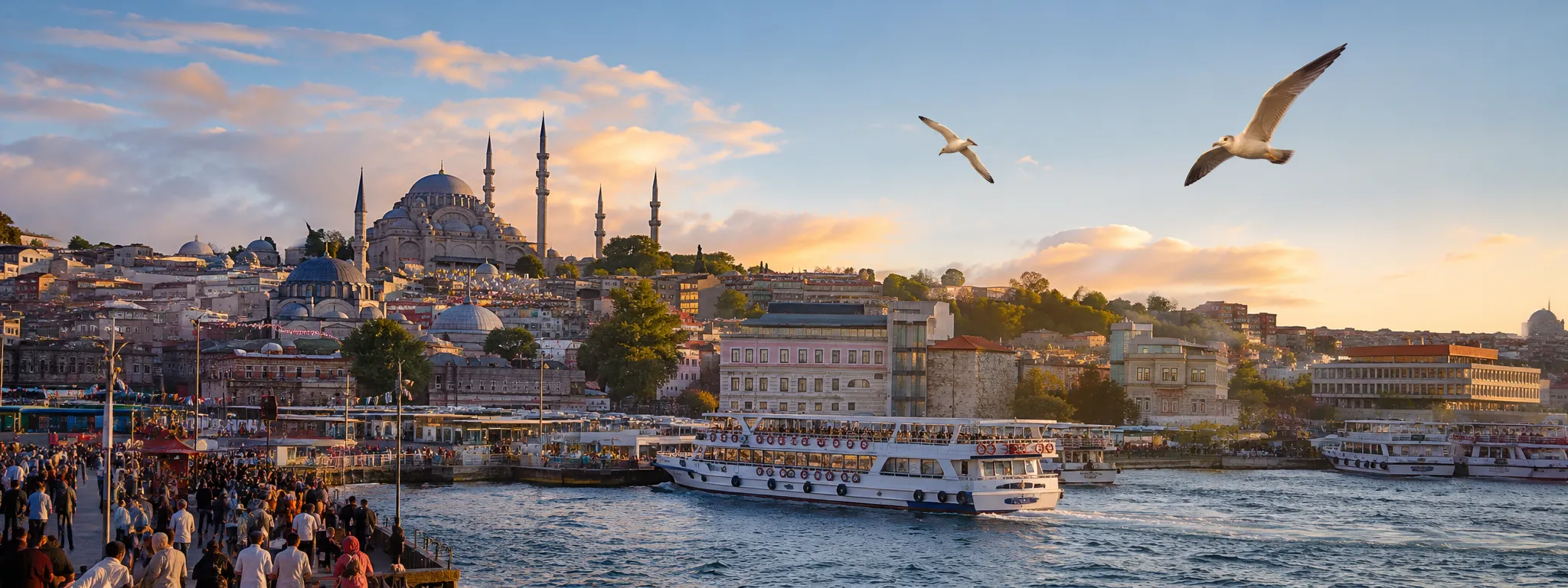
Istanbul feels complicated on a map because it spans two continents, a strait, the Golden Horn and a web of historic districts. On the ground, a first visit becomes much easier once you stop trying to “do Istanbul” as one giant centre. Think in clusters: Sultanahmet for the imperial core, Beyoğlu/Karaköy for the modern European side, and Kadıköy/Üsküdar for an Asian-side day or evening.
How many days do you need?
Three full days covers the headline historical core, one cross-Bosphorus experience and some neighbourhood time. Four days lets you slow down and add Topkapı, a long Bosphorus route, a hammam or deeper food exploration without sacrificing evenings. Five days gives room for museums, Asian-side neighbourhoods and weather flexibility.
A one- or two-day stopover can still be excellent, but keep the scope tight. Do not spend half of a 36-hour visit commuting to distant attractions because an algorithm labelled them “must-see”.
Where should a first-time visitor stay?
Sultanahmet is unbeatable for walking to Hagia Sophia, Blue Mosque, Topkapı Palace and Basilica Cistern, especially if history is the main reason for the trip. The downside is that evenings can feel tourist-focused.
Karaköy/Galata gives easy access to the old city, ferries and Beyoğlu with more restaurants and nightlife. Beyoğlu/Taksim has enormous hotel choice and late-night energy, but noise varies by street. Kadıköy suits travellers who value food and neighbourhood life and enjoy commuting by ferry.
For more detail, use our best areas to stay guide.
Two airports: check the code before booking anything
Istanbul has two major airports: IST (Istanbul Airport) on the European side and SAW (Sabiha Gökçen) on the Asian side. They are far apart. “Istanbul airport transfer” means nothing until you know which code is on your ticket.
Both have public-transport connections, but your best route depends on the hotel. Compare rail/coach options with the number of interchanges and luggage, not only the nominal price.
Get an Istanbulkart early
An Istanbulkart simplifies metro, tram, bus, funicular and many ferry journeys. Official visitor information says the card can be topped up at BELBİM-branded vending machines and used across the integrated network. Our Istanbulkart guide tracks the current fare context.
The first transport skill to learn is not memorising every line; it is understanding which modes solve which geography: T1 for Sultanahmet, metro for longer corridors, ferries for crossing the water and funiculars for steep connectors.
Day 1: orient yourself in Sultanahmet
Begin with the historic core, but keep the two active mosques flexible around prayer. Blue Mosque, Hagia Sophia, the Hippodrome and Basilica Cistern are packed into a small area. Topkapı Palace deserves a larger dedicated block rather than being squeezed between them.
Check prayer times before going to the Blue Mosque and Hagia Sophia. If one pauses tourist entry, switch to the Cistern or Hippodrome instead of treating the closure as a crisis.
Day 2: cross the Golden Horn and use the Bosphorus
Walk or tram toward Eminönü, cross Galata Bridge, explore Karaköy/Galata, then continue into Beyoğlu. End with a ferry rather than another road journey. Seeing Istanbul from the water is not optional if you want to understand its shape.
A simple commuter ferry to Kadıköy or Üsküdar gives a superb skyline without committing to a long commercial cruise.
Day 3: choose a theme instead of more greatest hits
Use the third day for something that matches your interests: markets and food around Eminönü/Fatih; Dolmabahçe and Beşiktaş; neighbourhoods such as Balat/Fener; Asian-side Kadıköy and Moda; or archaeology and palace collections.
This is the day Istanbul starts to feel like a lived city rather than a set of monuments.
Mosque etiquette in one minute
Active mosques are places of worship first. Dress modestly, remove shoes where instructed, women should be prepared to cover their hair, keep voices low and do not photograph worshippers as subjects. Tourist access pauses around prayer. Friday noon requires extra flexibility.
The Blue Mosque is free to enter; a paid guided tour is optional. Check official Diyanet Istanbul prayer times on the day.
Do not over-book timed tickets
Istanbul has variables you cannot control: security queues, prayer closures, ferry timing, traffic and weather. One or two fixed anchors per day is manageable. A chain of five prepaid time slots creates stress and makes the city itself feel like an obstacle.
Cluster attractions by location and leave breathing room for tea, a ferry or getting slightly lost.
Cash and cards
Cards work widely, but keep some Turkish-lira cash for small shops, markets and occasional machine/payment failures. At card terminals or ATMs, understand any offer to convert the charge into your home currency before accepting it.
Do not carry all your cash and cards in one wallet. A backup card stored separately is simple insurance against loss.
Language: how much Turkish do you need?
English is common in major tourist settings, but not universal. Learn a few basics: merhaba (hello), teşekkürler (thanks), lütfen (please), evet (yes), hayır (no). A translation app helps with menus and less-touristed transport situations.
Turkish pronunciation is relatively regular once you learn a few letter sounds, and an attempt at basic politeness is usually appreciated.
Safety without paranoia
Use big-city awareness: secure bags on crowded trams, choose your own bars rather than following an unsolicited “friend”, use established taxi/app channels and avoid demonstrations. Save the Turkish emergency number 112.
Read our Istanbul safety and common-scams guide and check your government’s current Türkiye travel advice shortly before departure.
Eating well on a first trip
Do not let “Turkish food” collapse into döner. Try a proper breakfast, meze, grilled fish, pide/lahmacun, a lokanta meal, kebab regional styles, baklava or other desserts, and strong tea. Kadıköy, Fatih, Beşiktaş and neighbourhood markets reward wandering.
In highly touristed areas, a restaurant with a magnificent view can be worthwhile — just recognise you are paying partly for the view.
Ferries are transport, not just an attraction
Using a public ferry solves two first-timer problems at once: it gets you across the Bosphorus and teaches you the city’s geography. The skyline makes more sense from the water than from a taxi trapped in traffic.
Carry an extra layer outside summer; wind on the water can be much cooler than a sheltered street.
What to pack
Comfortable walking shoes matter more than elegant travel footwear. Historic paving is uneven and the city is hilly. Pack a light scarf for mosque visits, weather-appropriate layers, a compact umbrella in wetter seasons, and a small day bag that closes securely.
A portable battery is genuinely useful because mapping, translation, photography and ticket QR codes consume power quickly.
When to visit
Spring and autumn often give the most comfortable walking weather. Summer brings heat and peak crowds; winter can be wet, windy and occasionally snowy but offers a different atmosphere. Ramadan and religious holidays can affect opening patterns while also adding cultural interest.
Whatever the season, check the specific operator for volatile opening hours rather than trusting a static itinerary written years earlier.
Common first-trip mistakes
- Booking accommodation without checking the exact street and transport connection.
- Confusing IST and SAW airports.
- Trying to cover both continents and every headline sight in 48 hours.
- Treating active mosques like museums with fixed all-day access.
- Using taxis for short central journeys that are faster by tram, ferry or foot.
- Eating only on the most tourist-facing streets.
- Skipping the Bosphorus because “it’s just transport”.
Useful primary sources
For current travel mechanics, use official operator information: Visit Istanbul’s Istanbulkart information, Metro İstanbul fares and Diyanet prayer times.