For current services, use Şehir Hatları for ferries and Metro İstanbul for M4/T3 information. These are better sources for live route planning than fixed times copied into a travel article.
Check transport before you go
This route is intentionally simple. The neighbourhood rewards spontaneous stops, and keeping spare time is more useful than collecting a long list of minor sights.
- Take a morning or late-morning ferry to Kadıköy.
- Walk the Çarşı/market streets and choose a few small food stops.
- Continue through Bahariye and its side streets.
- Head towards Moda and spend time on the waterfront.
- Return to central Kadıköy for dinner or an early evening drink.
- Check the live ferry/metro service before choosing your route back.
A practical first-timer route
The two Asian-side districts are complementary rather than substitutes. Choose Kadıköy for markets, food, cafés, bars and the Moda walk. Choose Üsküdar for a more traditional waterfront atmosphere and classic views back towards the historic peninsula. If you have a full day and enjoy neighbourhood exploration, doing both is reasonable; otherwise give one district enough time rather than racing between them.
Kadıköy or Üsküdar?
For a first short trip focused heavily on Sultanahmet sights, staying on the European side can still save time. For repeat visitors, longer stays and travellers who prefer evenings in a lived-in district, Kadıköy becomes much more compelling. Compare the trade-offs in our best areas to stay in Istanbul guide.
Kadıköy is a strong base for travellers who value food, nightlife, neighbourhood atmosphere and Asian-side access over being able to walk to the old city's monuments. The M4 is particularly useful for Sabiha Gökçen Airport access, while ferries make European-side visits enjoyable rather than difficult.
Should you stay in Kadıköy?
A common mistake is trying to combine Kadıköy with several major European-side attractions on the same day. The district is easy to reach, but its value comes from slowing down. If your itinerary already includes timed entries at Topkapı Palace, Hagia Sophia or another flagship sight, give Kadıköy a different day or a deliberately unhurried evening.
Three to four hours works for a ferry arrival, market wander and lunch. Six to eight hours lets you add Bahariye, Moda and a relaxed dinner. Kadıköy can also fill an evening on its own if food and nightlife are the priority.
How long to spend
If step-free access is essential, verify the exact ferry pier and rail facilities you intend to use before departure. Different vessels, piers and street approaches can create different practical experiences even when the overall route is accessible.
Metro İstanbul lists lifts and escalators at Kadıköy on the M4, but a neighbourhood day still involves uneven pavements, kerbs, crowds and long stretches on foot. The T3 can reduce some walking between central Kadıköy and Moda, although boarding conditions and crowding should be assessed on the day.
Accessibility and lower-mobility planning
Build in snack and toilet stops rather than trying to cover every street. For many families, a market lunch plus Moda is enough for a satisfying half-day.
Families can enjoy Kadıköy, particularly the ferry, food stops and Moda waterfront, but the central streets are busy. Near the piers there is constant pedestrian, bus and taxi movement; in the market, narrow lanes can become crowded. A compact stroller is easier than a bulky one, and the waterfront gives children more breathing room after the dense centre.
Kadıköy with children
If you plan to stay late but sleep on the European side, check your return route before the evening gets going. Ferry and rail operating patterns are not identical every night, and relying on a remembered last departure is an unnecessary way to end a good evening.
Central Kadıköy has a large evening scene, from casual pubs and music venues to restaurants and late cafés. It can feel more locally oriented than the most visitor-heavy parts of İstiklal Avenue. That does not mean every venue is quiet or inexpensive: check menus and any cover or event charge before settling in.
Nightlife and evenings
Late afternoon is especially pleasant, but do not make sunset a rigid promise. Weather, haze and cloud can change the view quickly. If the waterfront is windy or wet, retreat to the café streets rather than forcing a scenic plan.
Moda is the softer finish to a Kadıköy day. The waterfront and parks are good places to sit, walk and watch ferries and local life without needing another ticketed attraction. The views are different from the classic old-city panorama you get from Üsküdar; Moda looks more towards the Sea of Marmara and the wider Asian-side shoreline.
Moda: slow down by the water
Do not rush through this middle section just to reach Moda. The changing street character is part of the point: Kadıköy moves from transport hub to market, shopping and nightlife streets, then gradually becomes more residential as you approach the coast.
From the market, walking towards Bahariye gives the day a natural shape. This is a busier retail and cultural spine with side streets that reward detours. The T3 heritage tram runs through the area, but distances are manageable for most travellers who are comfortable walking.
Bahariye and the streets between the market and Moda
For visitors with allergies or strict dietary needs, do not assume a dish is safe because it looks simple. Stocks, yoghurt, butter, nuts and shared grills can matter. Ask clearly, and choose places where staff can explain ingredients rather than relying on visual guesses.
Kadıköy is one of Istanbul's best districts for a food-led afternoon because different styles sit close together. You can build a meal from bakery snacks, fish, meze, lokanta dishes, desserts and coffee instead of choosing one large restaurant at the start. Our where locals eat in Kadıköy guide goes deeper into the food side.
Food: graze instead of committing too early
Come hungry, but avoid treating the market as a food theme park. People are shopping and working here. Keep doorways clear, ask before photographing vendors at close range, and do not block narrow counters while deciding what to order. A small amount of Turkish — even a greeting and thank-you — goes a long way.
The market area is not one single enclosed building. Think of it as a dense cluster of pedestrian and semi-pedestrian streets behind the ferry zone, filled with fish, vegetables, olives, cheese, pickles, sweets, bakeries, coffee, meze and restaurants. The pleasure is in comparing counters and following whatever looks busy rather than chasing one supposedly mandatory shop.
Start with Kadıköy Çarşı and the market streets
If you are connecting from the European side by Marmaray, Ayrılık Çeşmesi provides an interchange with the M4. That can be faster than a ferry for some cross-city journeys, but for a first sightseeing visit the surface crossing is usually the more memorable arrival.
Rail is useful too. Metro İstanbul's M4 Kadıköy–Sabiha Gökçen Airport line begins at Kadıköy and runs east through the Asian side to the airport. The nostalgic T3 Kadıköy–Moda tram loops through central Kadıköy and Moda and can be useful when you want to reduce walking, although wandering on foot is usually the better way to understand the district.
For most visitors staying around Sultanahmet, Karaköy or Beşiktaş, the public ferry is the most enjoyable approach. The terminals put you directly at the edge of Kadıköy's centre. Use the current Şehir Hatları timetable to choose the pier that best matches where you are starting.
Getting to Kadıköy: ferry first, metro when practical
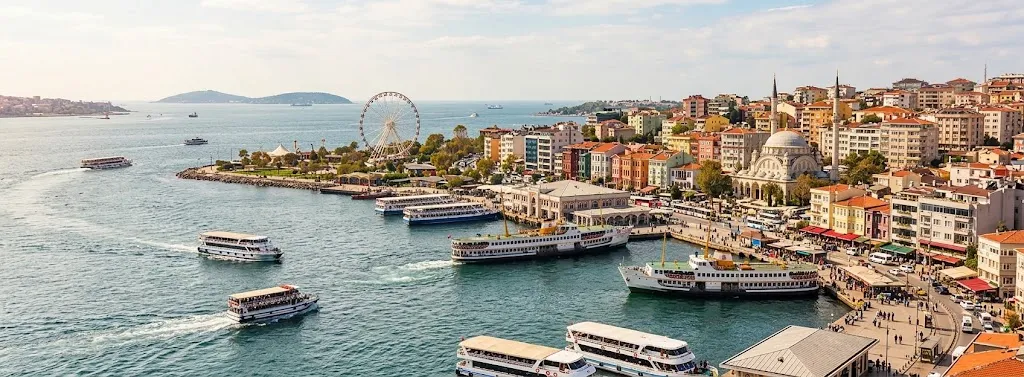
The crossing is part of the experience rather than dead travel time. Şehir Hatları currently lists direct Kadıköy services to several European-side piers, including Beşiktaş, Karaköy, Eminönü and Kabataş. Routes and timetables can change, so check the operator on the day rather than building a trip around an old blog timetable.
The main appeal is contrast. Sultanahmet concentrates many of Istanbul's headline historic sights; Kadıköy concentrates everyday urban life. Around the ferry piers and market you will find commuters, students, neighbourhood restaurants, specialist food shops, cafés, bookshops and bars sharing the same compact streets. That makes it particularly rewarding on a second or longer visit, but it is also an excellent half-day or full-day counterpoint to the historic peninsula.
Why Kadıköy is worth crossing the Bosphorus for
Kadıköy is one of the easiest places to understand why Istanbul feels like several cities at once. The ferry lands in a busy transport hub, but within a few minutes you can be in produce lanes, fishmongers and bakeries around the market, on café-lined Bahariye streets, or walking towards the calmer waterfront at Moda. It is not the neighbourhood to choose for a checklist of imperial monuments. It is the neighbourhood to choose when you want a strong day of food, street life, ferries and ordinary Istanbul rhythm.
Also resist the urge to judge Kadıköy by the traffic and transport hub immediately outside the piers. Walk several blocks into the market or towards Bahariye before deciding what you think of the district. The first few minutes are functional Istanbul; the appeal becomes clearer once you are inside the neighbourhood streets.
Arriving after a huge lunch wastes one of Kadıköy’s biggest strengths: grazing through the market. Scheduling every hour turns a neighbourhood day into a checklist. Assuming “Asian side” means far away is another mistake — the ferry makes central Kadıköy straightforward from many European-side bases. Finally, do not assume the same return service runs at the same frequency late at night; check the live operator information before your final round.