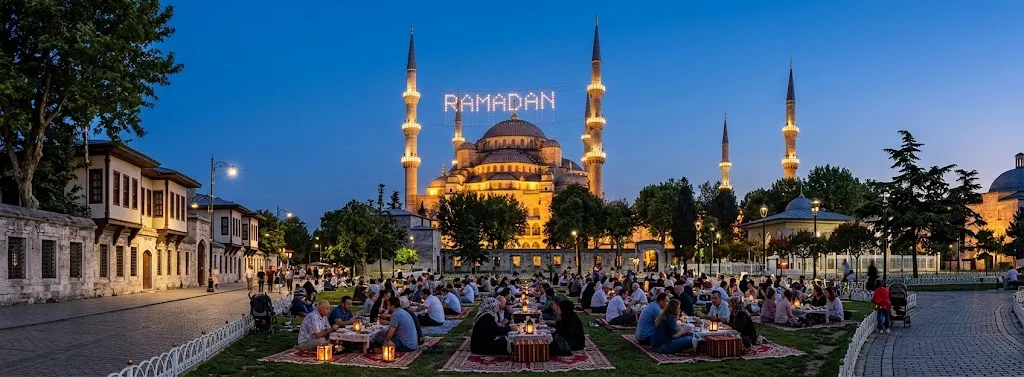
Ramadan (Ramazan in Turkish) changes Istanbul’s daily rhythm more than it changes a visitor’s access to the city. Many Muslims fast from dawn until sunset, while many other residents do not fast at all. Restaurants, attractions and transport continue to operate, but sunset meals, evening mosque activity and the public-holiday period at the end of the month can affect how you plan a day.
First correction: the fast runs from dawn, not sunrise
The previous version of this guide described fasting as running from sunrise to sunset. That is too loose. The daily fast begins at dawn before the morning prayer and ends at sunset. Exact prayer and iftar times change every day and by location, so use an official prayer-time source for the date you are actually in Istanbul rather than a generic timetable copied into a travel article.
Visitors are not expected to fast. Istanbul is a huge, diverse city, and fasting practice varies by person, family and neighbourhood.
What daytime Istanbul feels like
In the most visitor-heavy parts of Sultanahmet, Karaköy, Galata, Taksim and Kadıköy, it is generally straightforward to find food and drink during the day. Some smaller local businesses may alter hours, and more observant neighbourhoods can feel quieter around meals, but the city does not simply “shut down”.
You do not need to hide every sip of water. A little discretion in a quiet, traditional setting is polite; eating normally in a restaurant that is openly serving customers is not disrespectful.
Iftar is the biggest change a visitor will notice
İftar is the sunset meal that breaks the day’s fast. In the period before sunset, restaurants can become busy, families gather, tables are prepared and streets around major mosques or public gathering areas develop a noticeably anticipatory atmosphere. Once the fast breaks, dining demand can spike sharply.
If you want a particular restaurant at sunset, reserve rather than assuming you can walk in. If you prefer a quieter meal, eat earlier or later and let the iftar rush pass.
After dark: mosques, mahya lights and a livelier city
Ramadan evenings can be one of the most atmospheric times to walk Istanbul. Major mosques are illuminated, and traditional mahya light inscriptions can appear between minarets. Additional night prayers mean mosques can be much busier than on an ordinary evening.
That is culturally interesting, but worship comes first. Do not treat a busy prayer period as a photo opportunity that overrides access rules, dress expectations or instructions from mosque staff. For a sightseeing visit, use the quieter windows between prayer periods.
How mosque visits change
Tourist access at working mosques already pauses or tightens around prayers; during Ramadan, evening prayer activity is more intense. Dress modestly, follow the signs and staff instructions, and be prepared for a planned visit to shift if the prayer hall is busy.
If Hagia Sophia or the Blue Mosque is important to your trip, check their current visitor arrangements separately. Ramadan does not create one universal rule for every religious site.
Restaurants, alcohol and nightlife
Istanbul remains a major restaurant and nightlife city during Ramadan. Some businesses may choose to reduce hours or change service, while others operate normally. Alcohol availability is a business-by-business matter; do not assume every venue changes policy for the month, and do not assume every neighbourhood has the same social rhythm.
Beyoğlu, Karaköy and Kadıköy can still be lively after dark. The useful approach is to check the actual venue you plan to visit rather than applying a single stereotype to the whole city.
Transport around sunset and late evening
Metro İstanbul and Şehir Hatları publish live line and timetable information, and ordinary public transport remains fundamental during Ramadan. The practical issue is crowding: sunset, evening gatherings and special events can change demand around busy districts.
Use Metro İstanbul and Şehir Hatları for current operations rather than relying on a static Ramadan timetable in this article.
Ramazan Bayramı: the end-of-Ramadan holiday matters
The festival at the end of Ramadan is called Ramazan Bayramı in Türkiye. Diyanet’s current 2027 religious calendar lists the eve on 8 March and the three festival days on 9–11 March 2027. Domestic travel and family visits can increase around the holiday, and individual shops, offices or attractions may alter hours.
Do not confuse Ramazan Bayramı with Kurban Bayramı (Eid al-Adha), which is a separate holiday later in the year. If your itinerary overlaps either holiday, verify the exact museum, ferry, tour or restaurant you are relying on.
How to be respectful without overthinking it
Dress and behaviour rules at mosques are the same basic rules you should follow at any time. Around people who are fasting, avoid turning the fast into a spectacle or asking strangers intrusive questions about whether they are observing it. Accept that Istanbul contains observant Muslims, non-observant Muslims, people of other faiths and secular residents living side by side.
The goal is not to perform “perfect visitor behaviour”. It is to notice the changed rhythm, give worshippers space, and carry on with ordinary courtesy.
Who should actively choose Ramadan for a visit
I would not avoid Istanbul because of Ramadan. Travellers interested in living religious culture, evening street atmosphere and mosque traditions may find the month especially rewarding. Travellers who want every restaurant operating on an identical schedule, minimal crowds around major mosques or no holiday-related uncertainty may prefer another period.
For families, the main adjustment is timing: late iftar dinners and evening crowds may not suit young children every night, so keep daytime sightseeing and early meals in the mix.
Current sources checked
2027 religious dates were checked against the Diyanet 2027 religious-days calendar. Transport should be re-checked directly with Metro İstanbul and Şehir Hatları because service notices and event-related changes are operational, not evergreen.
Cheers, Carpe Diem & let the city’s evening rhythm surprise you! 🍻⏳🌙
TATS Man
planning around Istanbul’s living calendar, not stereotypes