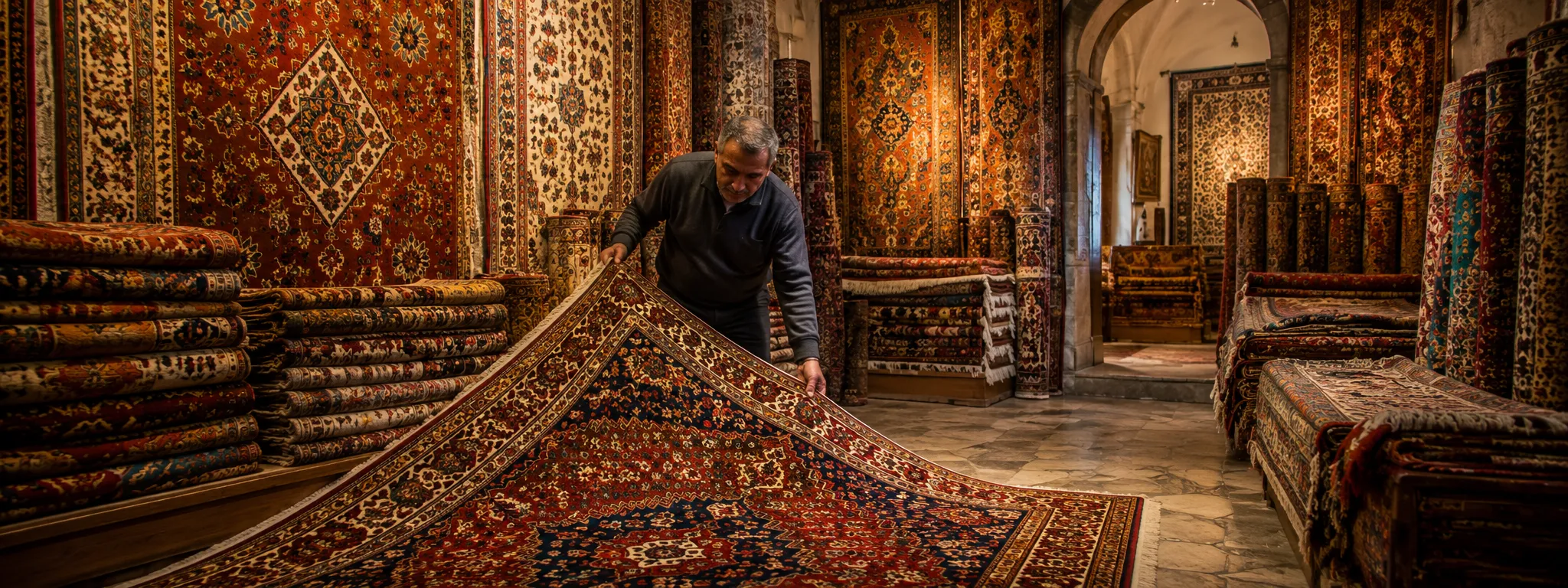
Turkish carpet and kilim weaving is a genuine Anatolian craft tradition, not a souvenir-shop invention. The Ministry of Culture and Tourism lists carpet-making and rug-making among Türkiye's traditional handicrafts and documents regional weaving centres, materials and knotting techniques. The complication is retail: a beautiful rug can be handmade, machine-made, new, old, Turkish, imported, restored or some mixture of those categories, and the price can change enormously depending on which description is true.
Carpet, kilim and machine-made rug are different products
A pile carpet is built with knots around warp threads, creating a raised surface. A kilim is generally a flatweave without that pile. Machine-made rugs can imitate either look extremely well. None of those categories is automatically “bad”; the problem begins when one is sold as another.
If you want handwork, say that explicitly. If you simply want a pattern you love at a sensible price, a clearly labelled machine-made piece can be a perfectly rational choice.
The Turkish knot is useful knowledge, not an authenticity magic trick
Official Turkish cultural material describes the Gördes or Turkish knot as a symmetrical double knot around two warp threads, contrasted with the asymmetrical Persian/Sine knot. That is real textile vocabulary, but I would not use one knot type as a lone test of value or origin. Different weaving traditions use different structures, and restoration can make a simple visual diagnosis harder.
Look at the back and fringe — as clues, not courtroom proof
The back of a handmade piece usually lets you see how the pattern was constructed and whether the weave has the slight irregularity of hand production. On a hand-knotted carpet, fringe often continues from the warp rather than being a decorative strip sewn onto a finished machine-made backing.
Those checks are useful, but a skilled imitation or repaired rug can fool a tourist. If the price is serious, I would treat visual tricks as the beginning of the conversation and ask for a written description from the seller.
Material changes feel, durability and price
Traditional Turkish weaving uses materials including wool, cotton and silk. A wool pile on a cotton foundation is a very different object from a fine silk carpet, and “silk-like” shine is not the same as silk. Ask what the pile is, what the foundation is, and whether dyes are natural, synthetic or mixed if that matters to you.
I would choose for how the rug will actually live: foot traffic, sunlight, pets, cleaning and the room it is going into matter more than winning a knot-count competition.
Knot density is one quality signal, not a universal league table
Higher knot density can allow finer detail, but design quality, fibre, finishing, condition, regional tradition and the skill of the weaver all matter. A bold village carpet can be excellent without looking like a fine silk Hereke piece. Be suspicious of any sales pitch that collapses value into one huge number with no explanation of how it was measured.
Origin and provenance should become more specific as the price rises
Türkiye has recognised carpet-weaving centres and regional traditions including Hereke, Uşak, Bergama, Gördes, Milas, Konya, Kayseri and others. “Turkish carpet” is therefore too broad to justify a premium by itself. Ask where the seller says the rug was woven, when, by whom or by what workshop if known, and whether the piece is new or old.
For expensive or supposedly antique pieces, I would want that claim on the receipt. A verbal story is not provenance.
Tea and unrolling are hospitality, not a contract
GoTürkiye's Grand Bazaar guide explicitly treats bargaining and tea as part of the shopping culture. Enjoy it. Ask questions. Let the seller unroll pieces. Then leave if you are not ready. You do not owe a purchase because someone spent twenty minutes showing stock.
I also would not negotiate against myself. Decide a maximum, compare more than one shop, and bargain only over a piece you would genuinely be happy to own.
Shipping: make the seller explain the boring details
For a large purchase, ask who packs it, which carrier is used, whether the shipment is insured, who handles customs documentation, and what happens if it arrives damaged. Keep an itemised receipt and photograph the rug you actually bought before it disappears into packaging.
Your home country may charge tax or impose biosecurity/customs rules. That is your responsibility even when the Istanbul shop arranges freight.
Older objects can trigger cultural-property export rules
This is the part I would never wave away with “the shop ships these all the time”. Türkiye's Ministry of Culture and Tourism states that protected movable cultural property cannot be taken abroad. Objects that a museum directorate certifies as not requiring registration can be exported when the supporting document is presented.
So if a rug is sold as genuinely antique, historically significant or unusually old, ask the dealer what export documentation applies before paying. Do not assume a normal commercial receipt settles cultural-property status.
A practical buying checklist
- Decide whether you want pile carpet, kilim or simply a design you like.
- Ask: handmade or machine-made? wool, cotton or silk? new or old? claimed origin?
- Inspect the back, edges, fringe, repairs and overall condition.
- Compare at least a few pieces and shops before a major spend.
- Get the description and final price in writing.
- For shipping, confirm insurance, customs responsibility and exact delivery address.
- For antique-looking pieces, resolve cultural-property/export paperwork before purchase.
Current sources checked
I checked the Ministry of Culture and Tourism's traditional handicrafts material, its detailed weaving and knotting guidance, GoTürkiye's Grand Bazaar guide, and the Ministry's cultural-property export guidance.
Cheers, Carpe Diem & buy the rug after the story survives the paperwork! 🍻⏳🧶
TATS Man
checking the back before falling in love with the front