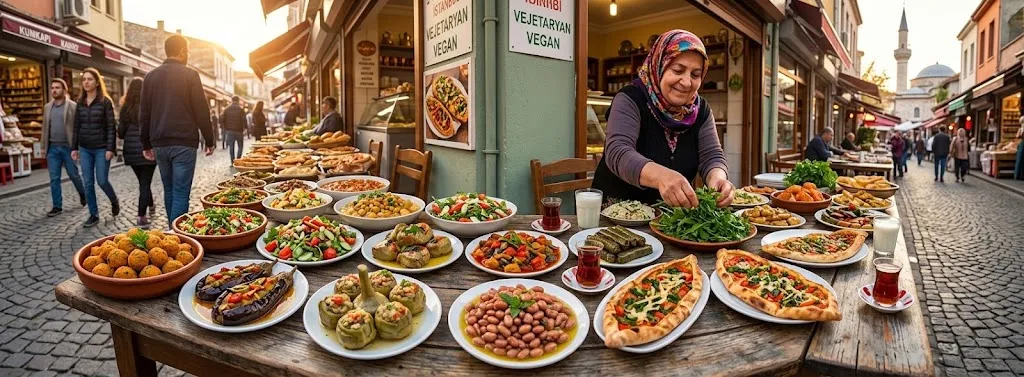
Istanbul is much easier for vegetarians than its kebab-heavy international reputation suggests, and workable for vegans with a little more questioning. The key is to stop looking only for restaurants labelled “vegetarian” and learn the traditional categories that already put vegetables, pulses, olive oil and grains at the centre of the table. Türkiye’s Ministry of Culture and Tourism has long documented vegetarian cooking as a substantial part of Turkish cuisine.
Zeytinyağlı is the category to learn first
Zeytinyağlı means “with olive oil” and describes a broad family of vegetable dishes commonly served cool or at room temperature. You will see green beans, artichokes, leeks, aubergine and stuffed vegetables in this style. Many examples are naturally vegan, which makes them one of the most useful categories at a traditional lokanta.
I still ask when the requirement is strict. Stuffed vegetables and vine leaves, for example, can exist in both olive-oil/rice and meat-filled versions. Pointing at the dish and confirming the ingredients is safer than assuming every dolma is the same.
Meze makes a full meal easier
A meze table lets you build dinner from several small plates: hummus, bean dishes, aubergine, tomato/pepper salads, greens, olives and stuffed leaves can all appear. This is particularly useful in a meyhane, where you can see or discuss the cold meze before ordering.
Vegetarians usually have abundant choice. Vegans should ask about yoghurt, cheese and butter because many classic meze use dairy even when there is no meat.
Lokantas are underrated for vegetarian lunch
A traditional cafeteria-style esnaf lokantası or home-cooking restaurant can be easier than a menu-heavy tourist restaurant because several vegetable dishes are visible at the counter. I would look for a busy lunchtime place, scan the trays, then ask which dishes contain meat or meat stock.
Useful categories include lentils, beans, rice, bulgur and seasonal vegetables. The advantage is variety: you can combine two or three smaller dishes instead of trying to find one “vegan main”.
Mercimek soup: common, but ask about the stock
Red lentil soup (mercimek çorbası) is everywhere and looks like an obvious vegan order. Often it is vegetarian, but recipes vary and may include butter or meat/chicken stock. For a flexible vegetarian it is usually an easy option; for a strict vegan, ask before assuming.
Breakfast is easy for vegetarians
A Turkish breakfast can include tomatoes, cucumber, olives, bread, jams, tahini/molasses, fruit, cheese, eggs, butter and honey. Vegetarians are spoiled for choice. Vegans can still eat well, but the default spread is dairy- and egg-heavy, so ask for plant-based items deliberately rather than paying for a giant set breakfast and leaving half of it untouched.
Simit is another easy breakfast/snack, but bakery recipes can vary. If your diet is strict or allergy-based, confirm ingredients rather than treating any street food as automatically safe.
Çiğ köfte can be a useful modern option
Many contemporary çiğ köfte shops sell the meat-free bulgur-based version, wrapped with lettuce, herbs and sauce. It can be a convenient quick vegan meal, but sauces and cross-contact vary by shop. Ask if everything in the wrap is vegan when that matters to you.
Where vegan dining is easiest
Kadıköy, Cihangir/Beyoğlu and other café-heavy central neighbourhoods have the widest concentration of contemporary places that understand the word “vegan” immediately. In Sultanahmet, you can still eat well, but I would rely more on traditional dishes and clear ingredient questions than on dedicated vegan venues.
I would not cross the city for every meal just because an app lists one specialist restaurant. Learn a few dish categories and use dedicated vegan places when you specifically want dessert, breakfast or a completely plant-based kitchen.
Useful words to know
- Vejetaryen — vegetarian.
- Vegan — vegan; widely understood in contemporary restaurants.
- Et yemiyorum — I do not eat meat.
- Tereyağı — butter.
- Süt ürünü — dairy product.
- Yumurta — egg.
- Bal — honey.
- Et suyu — meat stock/broth.
For a severe allergy, do not rely on a memorised phrase alone: use a translated allergy card and choose a restaurant able to discuss ingredients and cross-contact clearly.
A simple first-timer food plan
I would use a bakery/simit breakfast, a lokanta lunch built from visible vegetable/pulse dishes, and a meze dinner on one day. On another, try a contemporary vegan café in Kadıköy or Beyoğlu. That gives you traditional Turkish food and modern plant-based Istanbul without spending the entire trip hunting for substitute burgers.
Current source checked
Traditional vegetarian-cuisine context was checked against the Türkiye Ministry of Culture and Tourism’s Turkish Vegetarian Cooking material. Restaurant menus and recipes vary, so ingredient-specific questions remain the reliable approach for strict vegan diets and allergies.
Cheers, Carpe Diem & learn zeytinyağlı before you hunt for a substitute menu! 🍻⏳🫒
TATS Man
building dinner from the meze fridge instead of the kebab photo