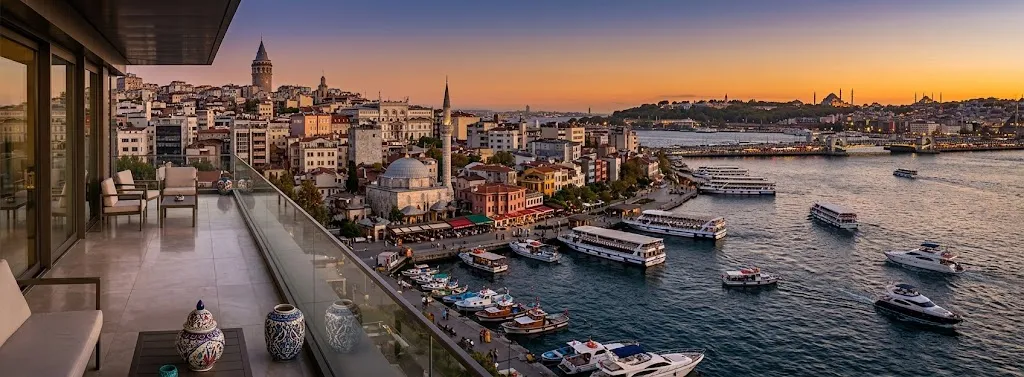
Karaköy is where ferries, trams, the historic Tünel, steep Galata streets, cafés, galleries and the waterfront all collide. It is one of central Istanbul's most useful transition neighbourhoods: close enough to walk to Galata, connected directly to Sultanahmet by the T1 tram, linked to Kadıköy by ferry and only a bridge away from Eminönü. The result is busy, walkable and extremely convenient, but not always peaceful.
Why Karaköy works so well for visitors
Few neighbourhoods connect as many useful parts of Istanbul with so little effort. From Karaköy you can walk uphill to Galata and Beyoğlu, cross Galata Bridge to Eminönü, take the T1 toward Sultanahmet or Kabataş, board ferries to the Asian side, or use the historic Tünel to avoid the steep climb toward İstiklal.
That makes Karaköy an excellent base for travellers who want flexibility more than a resort-like atmosphere. You are staying inside the transport network rather than commuting to it.
Start at the waterfront
The ferry piers and Galata Bridge give you the clearest sense of where Karaköy sits. Look south across the Golden Horn toward the Historic Peninsula, north toward the Galata slope and east along the Bosphorus. The constant movement of ferries is part of the neighbourhood's identity.
Şehir Hatları currently operates frequent Kadıköy–Karaköy–Eminönü services. Check the live timetable on the day, but in practice the ferry is often the most enjoyable way to add Kadıköy to a Karaköy-based itinerary.
The T1 tram is the main visitor transport spine
Metro İstanbul's T1 Kabataş–Bağcılar line stops at Karaköy and runs directly to Eminönü, Sirkeci, Sultanahmet and Beyazıt in one direction, and Tophane, Fındıklı and Kabataş in the other. That makes it particularly valuable for first-time visitors who want old-city access without staying inside Sultanahmet.
The downside is crowding. During busy periods, walking one stop or using a ferry can be more pleasant than forcing yourself onto a packed tram.
Use Tünel instead of fighting the hill
The historic F2 Tünel links Karaköy with the upper Beyoğlu area near the southern end of İstiklal Avenue. It is a short journey but a strategically useful one because the Galata slope is steep. If you are carrying bags, pushing a pram or simply saving your legs, the Tünel can turn an unpleasant climb into an easy connection.
Walking downhill later is much easier, so a sensible sightseeing pattern is Tünel up, explore Beyoğlu and Galata, then descend on foot.
Galata Tower is close — but uphill
Galata Tower looks almost overhead from parts of Karaköy, but the streets between them climb quickly. Allow more time than the map distance suggests. The route is full of cafés, design shops and old commercial buildings, so it is better treated as a neighbourhood walk than a direct march to the tower.
If mobility or heat is an issue, use Tünel and approach from above rather than tackling the steepest lanes first.
Cafés, restaurants and changing Karaköy
Karaköy has transformed from a primarily port and workshop district into one of the city's best-known café, restaurant and nightlife areas. Old hardware businesses and trade streets still exist beside specialty coffee, bakeries, cocktail bars and contemporary dining. The mix changes quickly and is part of what keeps the neighbourhood interesting.
Do not assume the most photogenic lane offers the best value. Check menus, follow busy local lunch spots and explore a few blocks away from the waterfront before deciding where to eat.
Galataport and the eastern waterfront
East of old Karaköy, the redeveloped cruise-port area has added a polished waterfront promenade, shops, restaurants and cultural venues. It is a very different atmosphere from the older lanes around the ferry piers. Whether you like it depends on what you want: clean waterfront access and contemporary facilities, or the rougher commercial texture of old Karaköy.
Cruise-ship days can bring heavier pedestrian traffic. If the area feels crowded, move inland or toward Tophane rather than assuming all of Karaköy is equally busy.
Walk across Galata Bridge
The bridge to Eminönü is not just a transport link; it is one of the best simple walks in central Istanbul. Fishermen line the upper level while ferries move below, and the skyline of the Historic Peninsula opens ahead of you. It is an easy way to connect Karaköy with the Spice Bazaar and old city without waiting for a tram.
In strong sun or bad weather the exposed bridge can be uncomfortable, so keep the T1 as your fallback.
A practical half-day route
- Arrive at Karaköy by ferry or T1. Spend a few minutes at the waterfront to orient yourself.
- Take Tünel uphill. Explore the upper Galata/Beyoğlu edge without starting with the steepest climb.
- Walk toward Galata Tower. Visit only if it is a priority; the surrounding streets are worthwhile either way.
- Descend through Karaköy's café and workshop streets. Stop for lunch or coffee.
- Finish by ferry, Galata Bridge or Galataport. Choose based on where the rest of your day is heading.
Best time of day
Morning is good for quieter streets and easy transport. Lunchtime brings office and visitor traffic. Late afternoon into evening is when cafés, restaurants and bars become more prominent. If you want nightlife without the intensity of central İstiklal, Karaköy is a strong choice.
On cruise-heavy days, the eastern waterfront may be busiest around ship arrivals and departures. The older core near Galata Bridge remains active regardless.
Nightlife
Karaköy's nightlife is more bar-and-restaurant focused than giant-club focused. It works well for a relaxed evening of drinks and food followed by a walk or short ride back to Beyoğlu. Venues change often, so avoid planning a whole night around an old 'best bars' list without checking that places still exist.
Late at night, confirm your onward transport before the last convenient ferry or tram rather than assuming daytime frequency continues indefinitely.
Families and accessibility
The waterfront and T1 platform areas are comparatively manageable, but the climb toward Galata is steep and many older streets have uneven paving. Families with prams and travellers with limited mobility should use Tünel or stay closer to the waterfront rather than forcing a hill route.
Busy road crossings and tram tracks require attention, especially with children. The neighbourhood is compact, so there is no benefit in rushing.
Is Karaköy a good place to stay?
Yes if you value transport, restaurants and being between the old city and Beyoğlu. It is particularly strong for short first visits because you can reach Sultanahmet, Galata, Kadıköy and the Bosphorus without complicated transfers. The trade-offs are street noise, nightlife activity and variable room outlooks in dense historic buildings.
Check our best areas to stay guide before booking, and read hotel reviews for noise and lift access rather than judging only by the map.
Common mistakes
- Underestimating the hill to Galata. Use Tünel when it helps.
- Taking the tram for every one-stop journey. Walking or ferry connections can be easier.
- Assuming Galataport is all of Karaköy. The older streets have a very different character.
- Ignoring ferry options. Kadıköy is often more enjoyable by boat than by a chain of rail transfers.
- Booking a hotel without checking noise. A central nightlife location can stay lively late.
- Following stale venue lists. Restaurants and bars change quickly.
How Karaköy fits a first Istanbul trip
Karaköy works best as connective tissue. Spend one day crossing from Sultanahmet over Galata Bridge, another taking a ferry to Kadıköy, and use the hill toward Galata and Beyoğlu when you want nightlife or shopping. You may pass through the neighbourhood several times without repeating the same experience.
Shopping and design
Karaköy mixes practical trade businesses with fashion, ceramics, books, jewellery and design shops. The most interesting browsing is often on streets where old commercial uses and newer retail overlap rather than inside a single shopping complex. Prices range from everyday to premium, so browse before buying.
If shopping is not a priority, these streets still add texture to the walk between Galata and the waterfront. You can see how the neighbourhood's working-port history is being reused rather than erased completely.
Traffic, construction and pedestrian awareness
Karaköy can look compact and pedestrian-friendly on a map, but tram tracks, delivery vehicles, taxis, construction zones and cruise traffic create busy crossings. Watch the rails when stepping into the street and do not assume a narrow lane is pedestrian-only because it is full of café tables.
Give yourself extra time with luggage. A hotel that is 300 metres away may involve cobbles, gradients and a crowded crossing, so the last part of the journey can be slower than expected.
What Karaköy is not
It is not a quiet historic village and it is not the old city. Visitors sometimes book here expecting postcard calm because Galata Tower is nearby. In reality, Karaköy is active from early commuter hours into the evening, with ferries, nightlife, restaurants and through-traffic. That energy is exactly why many travellers love it, but it should be an informed choice.
Rainy-day strategy
Karaköy is one of the easier central districts to keep using in bad weather because transport choices are close together. Duck into a café, use Tünel instead of a wet hill climb, take the T1 for longer hops and move your ferry crossing if the weather makes the deck unpleasant.
The main caution is paving: cobbles, rails and steep Galata streets can become slippery. Slow down and prioritise the flatter waterfront if conditions are poor.