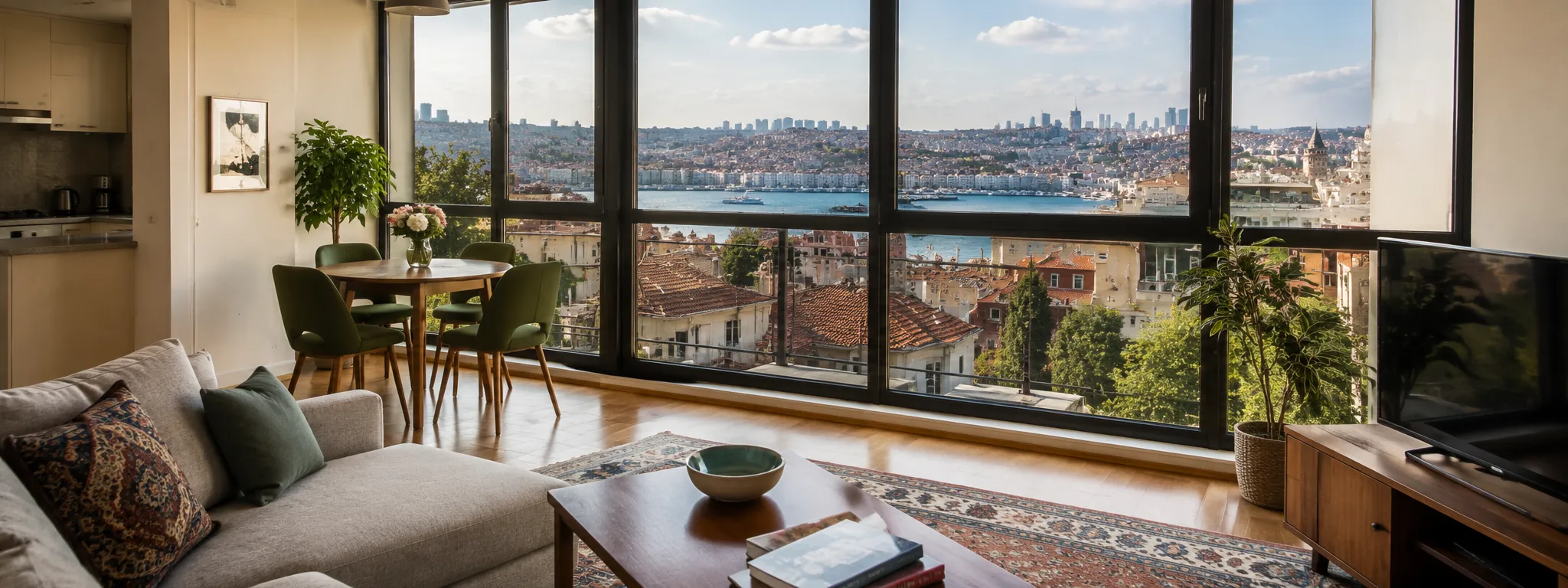
For a week-plus Istanbul stay, an apartment can be genuinely better than a hotel — but only when the extra space, kitchen and neighbourhood rhythm are worth the loss of hotel services. I would not use an apartment automatically just because the nightly rate looks lower. The practical question is whether the building, location and legal listing are good enough for the way you will actually live in the city.
When an apartment really beats a hotel
The strongest case is usually a stay long enough that normal life starts to matter. A washing machine, a separate living area, a fridge and even a modest kitchen can save time and make breakfast or a quiet evening easier. Families, remote workers and travellers staying ten days or more often gain more from that flexibility than someone racing through Istanbul for three nights.
For a short sightseeing trip, I still lean towards a well-located hotel. Reception, luggage storage, daily cleaning and a simple arrival can be more valuable than a kitchen you barely use.
Check the tourism-rental permit before paying
Under Law No. 7464 and current Ministry guidance, tourism rentals of 100 days or less require a Ministry-issued permit. Current Ministry notices also require advertised properties to show their permit number and correct province, district and neighbourhood information. I would look for that number in the listing and treat a missing or evasive answer as a reason to keep searching.
This is a property-compliance issue, not an immigration shortcut. A longer accommodation booking does not change your visa, visa-free stay or residence-permit position; use our Türkiye entry guide and official Turkish immigration information for the length of stay you are personally allowed.
What apartment living changes day to day
- Kitchen: useful for breakfast, fruit, market shopping and the occasional night in; it does not need to replace Istanbul’s food scene.
- Laundry: a major advantage on a two-week trip, but confirm the machine is actually inside the unit and usable.
- Housekeeping: usually less frequent than a hotel unless the listing explicitly includes it.
- Reception: often none. Late arrival, key collection and luggage storage need a real plan.
- Neighbours: you are staying in a residential building, so late-night hallway noise and party behaviour matter more than in a hotel.
Kadıköy: my strongest long-stay all-rounder
Kadıköy makes sense when you want markets, cafés, ferries and ordinary neighbourhood life around you. It is less convenient for repeatedly walking to Sultanahmet sights, but over ten or fourteen days that trade-off can be worthwhile. Ferry access also makes the commute itself part of the city rather than dead travel time.
Cihangir and Beyoğlu: central, lively and building-dependent
Cihangir works for travellers who value cafés, restaurants and walking access to Beyoğlu. The caution is the building stock: lifts are not guaranteed, hills are real and nightlife noise can change dramatically from one street or even one side of a building to another. I would read recent reviews for stairs, street noise and air-conditioning rather than relying on the neighbourhood name alone.
Beşiktaş: strong transport, less postcard Istanbul
Beşiktaş is a useful base for ferries, buses, the Bosphorus and everyday food. It is a better fit for a repeat visitor or longer stay than for someone whose entire plan is the Historic Peninsula. The payoff is a neighbourhood that still feels useful after you have finished the headline sights.
Sultanahmet: convenient for sights, weaker for settling in
Sultanahmet is brilliant for a first short visit because the Hagia Sophia, Blue Mosque, Topkapı Palace and Basilica Cistern sit close together. I would not automatically choose it for two weeks. The visitor economy is intense, evening variety is narrower and the apartment stock can be less practical than in residential districts. Use it when monument access is the priority, not because “old city” sounds more authentic.
Building details I would verify in writing
- Exact floor and whether there is a working lift.
- Air-conditioning and heating in the rooms you will actually use.
- Wi-Fi arrangement if work depends on it — not just “Wi-Fi available”.
- Washing machine, kitchen equipment and hot-water setup.
- Street-facing versus courtyard-facing bedrooms.
- Check-in method if you arrive late.
- Nearest metro, tram or ferry stop, tested on a real map rather than the listing’s “central” label.
My booking strategy
I would shortlist by neighbourhood first, then eliminate anything without a clear permit number for a short tourism rental, unclear lift/air-conditioning information or recent complaints about access. After that, compare the total stay cost with a hotel — including cleaning fees, deposit rules and the value of services you may be giving up.
For a week or two, the best apartment is not the cheapest square metre count. It is the place that lets you live an ordinary Istanbul day without turning every museum visit, grocery run or late arrival into a logistics problem.
Current sources checked
Short-term rental rules were checked against the Türkiye Ministry of Culture and Tourism and current provincial Ministry guidance under Law No. 7464. Property rules can change, so confirm the permit details shown on the actual listing before booking.
Cheers, Carpe Diem & choose the neighbourhood before you choose the sofa! 🍻⏳🏠
TATS Man
checking the permit number before unpacking for a fortnight