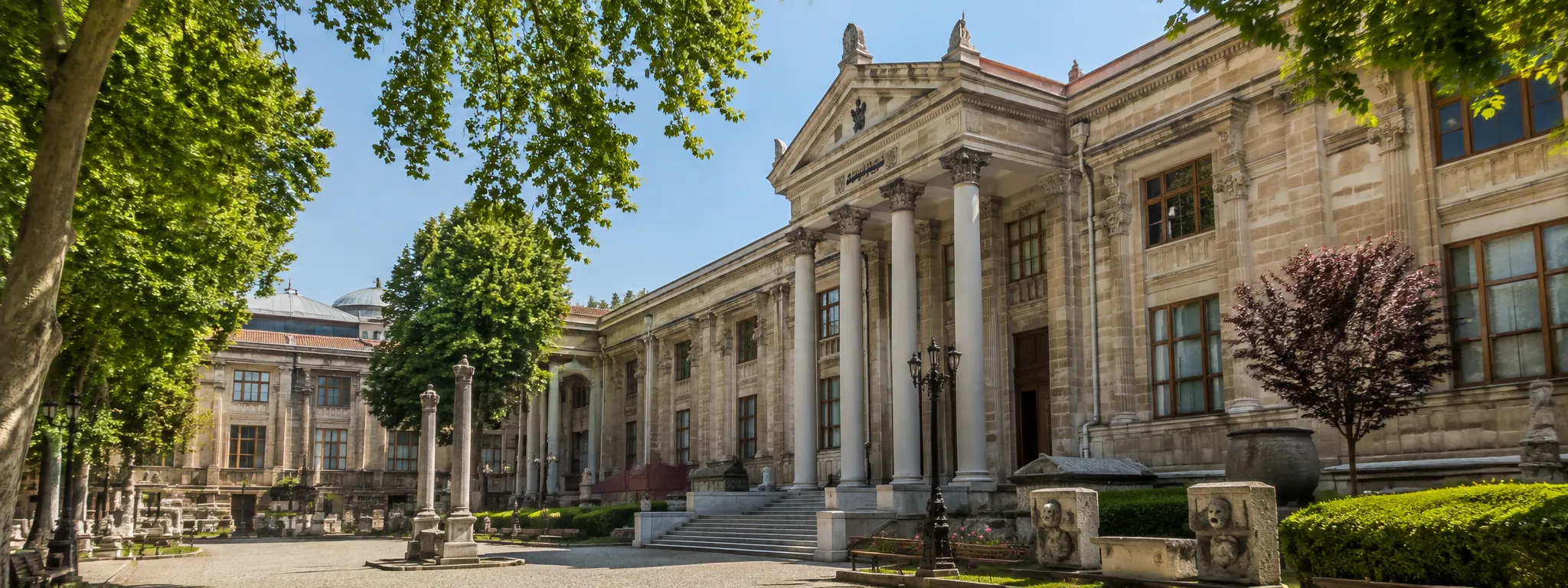
The Istanbul Archaeology Museums are easy to underestimate because they sit beside two blockbuster neighbours: Topkapı Palace and Hagia Sophia. That is exactly why they can be so rewarding. The collection ranges across the ancient Mediterranean, Anatolia and the Near East, and the museum’s own history is bound up with the late Ottoman development of archaeology and cultural heritage institutions.
The complex is not just one gallery. It comprises the Archaeological Museum, the Museum of the Ancient Orient and the Tiled Kiosk. Open galleries can change during restoration work, so check the current Ministry museum page before building your day around a specific room.
Why visit
Come if you enjoy ancient history, sculpture, inscriptions or museum collections with real depth. It is especially strong as a complement to Istanbul’s Byzantine and Ottoman monuments because it pushes the city story much further back and outward across the former empire.
The Alexander Sarcophagus
The most famous object is the so-called Alexander Sarcophagus, discovered at Sidon. It was not Alexander the Great’s coffin, but its battle and hunting reliefs include imagery associated with him and preserve extraordinary carving and traces of ancient colour. Give it time from several angles.
The Sidon sarcophagi
The Alexander Sarcophagus is part of a broader group of elite funerary monuments from the Sidon necropolis. Seeing them together is more informative than treating one object as an isolated masterpiece.
Classical sculpture
The main archaeological collection includes Greek and Roman sculpture, architectural pieces, grave monuments and inscriptions. If you have limited time, choose a thematic route rather than trying to inspect every case.
Museum of the Ancient Orient
This part of the complex extends the story into Mesopotamian, Egyptian, Anatolian and other ancient Near Eastern cultures. Gallery availability can vary with conservation work, which is another reason to check the current official listing shortly before visiting.
The Tiled Kiosk
The fifteenth-century Tiled Kiosk is itself an important historic building and holds ceramics and tile work. It gives the museum complex an architectural range that a single modern museum building would not.
How long to allow
Allow at least 90 minutes for a selective visit and two to three hours if archaeology is a major interest. Trying to bolt the entire museum onto an already full Topkapı morning usually turns both experiences into a rush.
Tickets and current opening
Ticket prices, MuseumPass acceptance, gallery closures and seasonal hours are volatile. Check the official Ministry of Culture museum listing at muze.gov.tr immediately before your visit. Avoid copying a price from an undated search snippet.
Night-museum periods
Türkiye’s Night Museums programme has included the Istanbul Archaeology Museums during summer periods. Treat evening access as a dated seasonal programme rather than a permanent year-round promise and confirm the current DOSİM/Ministry announcement before going late.
Getting there
The museums sit below Topkapı’s first courtyard, close to Gülhane and Sultanahmet. The T1 tram is the most useful public-transport spine for most visitors. Walking from Sultanahmet is straightforward but includes historic paving and gradients.
Accessibility
Accessibility differs across historic buildings and galleries. If step-free access is important, check the current official museum information and ask staff which entrances and lifts are operating before committing to a particular route.
Families and children
The museum works best for children when you choose a short “treasure hunt”: the Alexander Sarcophagus, lions and monumental sculpture, ancient writing, and one ceramics section. A two-hour case-by-case march is harder for most families.
Photography
Rules can vary by gallery and exhibition. Follow on-site signs, avoid flash where prohibited and do not assume a temporary exhibition has the same policy as the permanent collection.
Combine with Topkapı — carefully
The museum is geographically perfect with Topkapı Palace, but both deserve time. A sensible combination is Topkapı in the morning, lunch, then a selective museum visit. If you are a serious museum visitor, separate them.
Combine with Gülhane
After galleries, Gülhane Park provides a useful decompression stop before you return to the denser streets. This is one of the easiest ways to make a museum-heavy day feel balanced.
What to skip if short on time
Do not attempt every floor. Pick the Sidon sarcophagi, a classical section and whichever Ancient Orient or Tiled Kiosk galleries most interest you. The collection rewards selective attention.
Official source
Use the Republic of Türkiye Ministry museum page for current access, ticket and closure information. The Istanbul Governorate’s museum overview is useful background but should not be used for current hours.