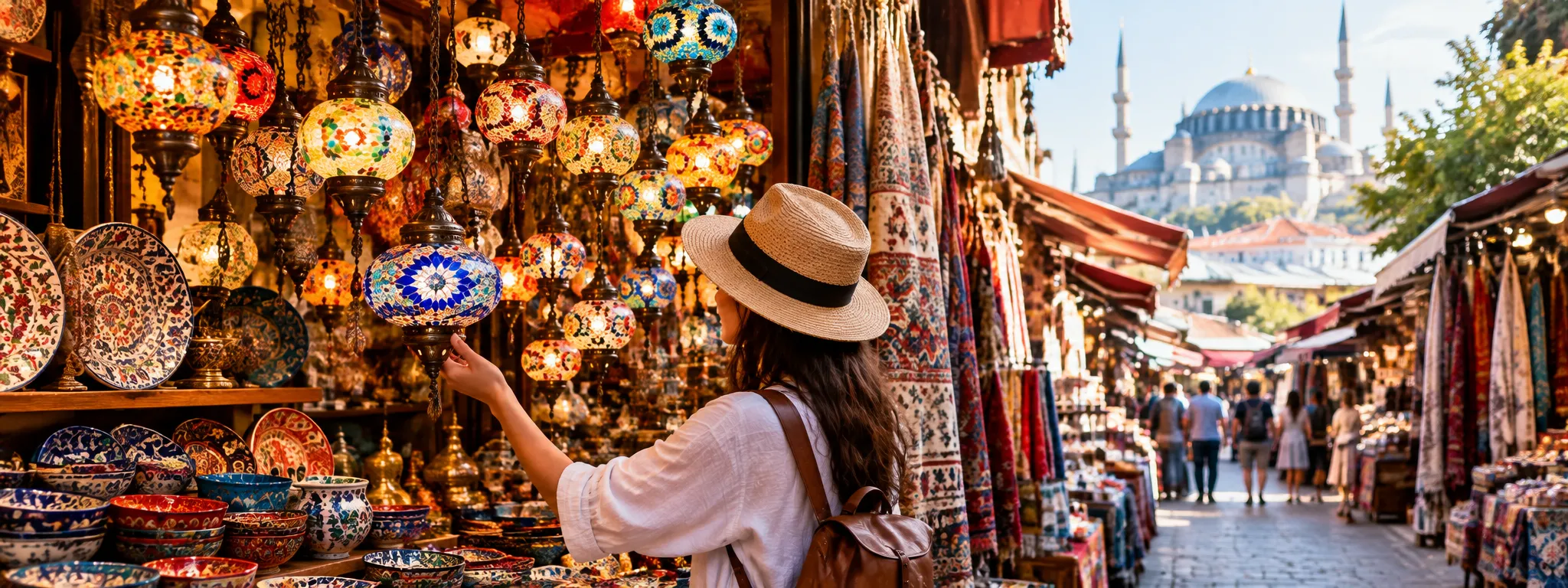
Istanbul is one of those cities where the shopping can be part of the sightseeing: centuries-old bazaars, gold and jewellery workshops, carpet dealers, ceramics, leather, food markets and contemporary design all overlap. The trap is assuming “traditional-looking” automatically means handmade or good value. I would decide what category you actually care about, compare a few sellers, then negotiate only after you understand the product.
Textiles, peshtemals and scarves
Textiles are one of the easiest souvenirs to compare because you can feel the material and inspect the weave yourself. Cotton hammam towels (peştemal), scarves and woven cloth travel well and do not create the breakage problem of ceramics or lamps. I would compare weight, finishing, fibre claims and stitching across several shops rather than judging quality from pattern alone.
İznik-style ceramics: ask what you are buying
Blue, turquoise and red İznik-inspired designs are everywhere. GoTürkiye’s artisan guidance highlights İznik tiles and pottery as a major Istanbul shopping category, but modern pieces range from hand-painted workshop ceramics to printed souvenir ware. Both can be perfectly good purchases; the problem is paying artisan prices for a mass-produced piece.
Ask whether it is hand-painted, inspect repeated motifs for obvious print uniformity, and check the back/foot of the piece. If authenticity matters, buy from a workshop or specialist that can explain the maker and technique instead of relying on a “genuine” sticker.
Turkish carpets and kilims: slow the conversation down
A carpet is the category where I would do homework before entering a serious sales conversation. Hand-knotted pile carpets, flat-woven kilims, machine-made pieces, new production and older textiles can all sit in the same market. Our Turkish carpet guide explains the distinctions in more depth.
Do not let tea, hospitality or a long demonstration make you feel obliged to buy. Ask about material, construction, origin and return/shipping terms; photograph the piece and paperwork if it is being shipped separately.
Spices, tea, coffee and edible gifts
The Spice Bazaar and surrounding Eminönü shops make edible souvenirs easy: tea, Turkish coffee, dried fruit, nuts, spices and lokum are all obvious candidates. GoTürkiye’s current Spice Bazaar guide confirms the market’s continuing focus on herbs, spices, tea, dried fruits, honey, cheese and other food products.
I would favour sealed or clearly packaged products when you are flying internationally and check your destination country’s biosecurity/customs rules before buying meat, dairy, seeds, loose plant material or large quantities. “They sell it to tourists” is not the same as “your country allows it in”.
Lamps and lanterns: buy the packing plan too
Mosaic lamps are spectacular in a shop and awkward in a suitcase. Before paying, ask how the glass pieces, frame and electrical components will be protected, and whether the plug/wiring suits where you live. If a shop offers international shipping, get the cost, carrier, insurance and damage process in writing rather than treating “we ship everywhere” as the end of the conversation.
Leather goods: construction beats sales language
Leather remains a major Grand Bazaar category. I would inspect stitching, zips, lining, edge finishing and how the item feels when flexed. Brand-like logos and dramatic “factory” stories tell you less than the physical construction. For an expensive jacket or bag, compare at least two shops before bargaining seriously.
Jewellery and gold: understand the basis of the price
The Grand Bazaar has long-established gold and jewellery sections. For a meaningful purchase, ask about metal purity, hallmarking, stone details, labour and written documentation. Gold prices move; I would not publish a fixed “good price per gram” that becomes stale. Compare like with like and keep a proper receipt for anything valuable.
Where I would shop for different moods
- Grand Bazaar: maximum range, history, carpets, jewellery, leather and the full negotiation experience.
- Spice Bazaar/Eminönü: edible gifts, spices, tea, coffee, dried fruit and a compact market visit.
- Arasta Bazaar: smaller, calmer Sultanahmet shopping for carpets, textiles, ceramics and glassware.
- Kadıköy/Beyoğlu: better when you want contemporary shops, food and a neighbourhood day rather than one monumental bazaar.
How I negotiate without turning it into theatre
In a bazaar shop where negotiation is clearly part of the transaction, I first ask questions and decide whether I actually want the item. Then I ask the price, make a reasonable counter-offer and stay comfortable walking away. I do not invent a fake budget, insult the product or spend 20 minutes bargaining over something I never intended to buy.
Fixed price tags in modern retail, supermarkets and chain stores are different. If you are unsure, asking “Is this the fixed price?” is much less awkward than launching into a performance everywhere.
Getting purchases home
Photograph receipts for higher-value purchases, keep fragile items in hand luggage where airline rules permit, and confirm customs requirements at home. For shipped carpets, ceramics or jewellery, retain the seller’s full details and written shipping terms. A souvenir stops being a bargain if replacement, customs or damage becomes your problem with no paperwork.
Current sources checked
Market/product context was checked against current GoTürkiye Grand Bazaar, Arasta Bazaar, Spice Bazaar and artisan-shopping guidance. Individual shop quality and prices change constantly, so this guide focuses on durable buying decisions rather than permanent “best shop” claims.
Cheers, Carpe Diem & buy the story only after you’ve checked the stitching! 🍻⏳🛍️
TATS Man
browsing three shops before starting the serious haggle