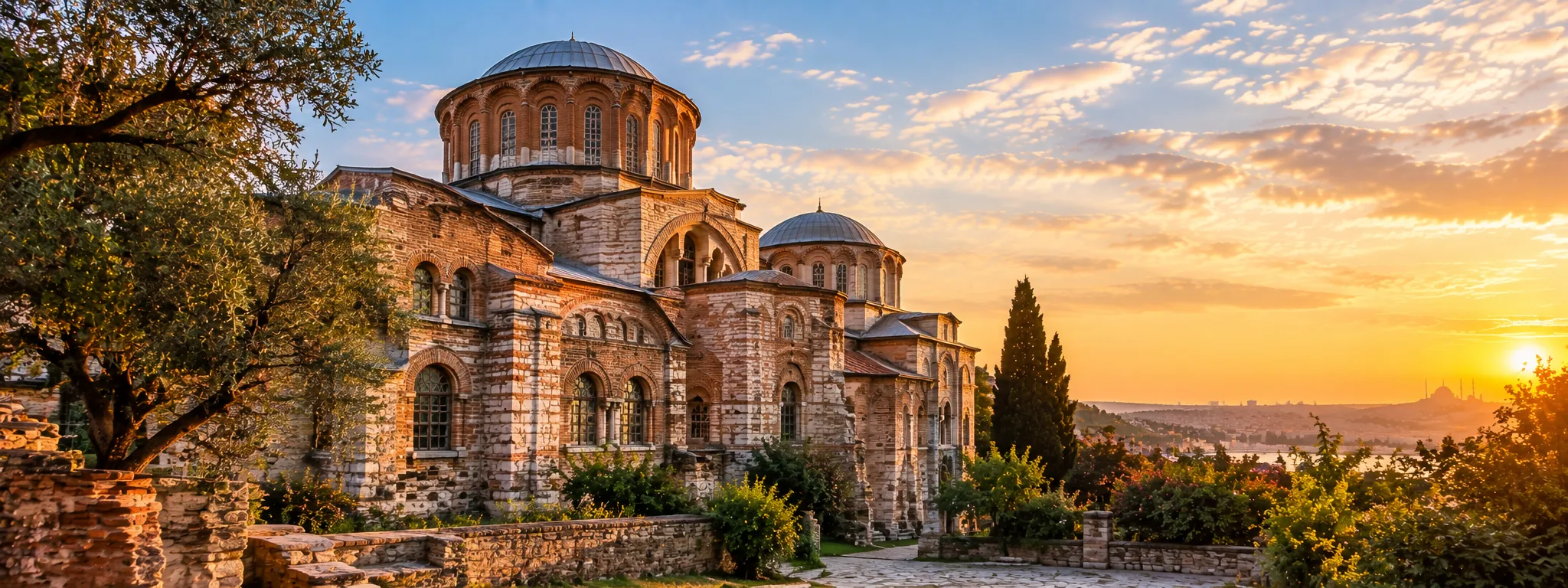
Kariye Mosque — the former Chora Church — is one of Istanbul’s most important Byzantine art sites, but it is no longer a conventional museum. The building reopened for worship in 2024 and now uses a visitor-management system that separates tourist access from prayer. That matters when you plan a visit: the mosaics and frescoes are still the reason to come, but opening periods, Friday access and prayer-time pauses are part of the experience.
Why Kariye is worth the detour
Chora is much smaller than Hagia Sophia, and that scale is its strength. The late Byzantine mosaics sit close enough to study rather than admire from a distant gallery. Narrative scenes from the lives of Christ and the Virgin spread across the narthexes, while the parekklesion side chapel contains the dramatic fresco cycle centred on the Anastasis — Christ raising Adam and Eve from their tombs.
What changed when it became a mosque again
The building’s status changed from museum to mosque, so treat it as an active religious site rather than a ticketed gallery with guaranteed all-day access. Tourist entry can stop before prayers, and Friday is reserved for worship. Dress modestly, keep voices low and follow staff directions about which areas are open. This is not just etiquette; it is the difference between a smooth visit and arriving during a period when sightseeing access is suspended.
The mosaics to look for
- Christ Pantocrator: one of the first powerful images encountered in the narthex sequence.
- Genealogy and infancy scenes: unusually detailed narrative mosaics reward moving slowly around the vaults.
- The Virgin cycle: scenes from Mary’s life are among Chora’s defining works.
- The Anastasis fresco: in the funerary chapel, the Resurrection image is the visual climax for many visitors.
- Architectural fragments: marble revetments, domes and irregular extensions help explain how the building evolved over centuries.
How long to allow
Allow roughly 60–90 minutes if Byzantine art is a major interest, or 40–60 minutes for a focused visit. The building is compact, but the detail is dense. Rushing through in 20 minutes defeats the purpose, especially after travelling out from the main historic core.
Best time of day
Aim for a weekday morning after the site has opened but away from a prayer-time pause. Avoid building a tight connection immediately after Kariye because access can briefly stop for worship. Friday is a poor choice for sightseeing because tourist visits are closed.
Getting to Kariye
Kariye sits in Edirnekapı/Fatih, near the land walls rather than the Sultanahmet cluster. Public transport usually means combining tram/metro/bus routes and walking the final section; a taxi is simpler if you are short on time. Pairing Kariye with the Fener and Balat area or the historic land walls makes the journey much more worthwhile.
A sensible half-day route
Start at Kariye in the morning, walk or ride south-east toward Fener/Balat for lunch and neighbourhood exploration, then continue toward the Golden Horn. This creates a coherent Byzantine-and-neighbourhood day without repeatedly crossing Istanbul. If you prefer monuments, combine it with the land walls and Mihrimah Sultan Mosque around Edirnekapı.
Accessibility and physical effort
The site itself is compact, but the surrounding district includes slopes, uneven paving and busy roads. Travellers with limited mobility should favour taxi drop-off/pick-up and ask staff which visitor areas are step-free on the day. Do not assume every historic section of the building is fully accessible.
Photography and respectful behaviour
Photography rules can be adjusted for worship or conservation. Avoid flash, tripods that obstruct circulation, photographing worshippers at close range, or treating roped-off areas as optional. If staff restrict photography in a particular section, follow the instruction even if older travel reports say otherwise.
Kariye versus Hagia Sophia
Hagia Sophia wins for scale and global historical significance; Kariye is better for close-up late Byzantine mosaic and fresco detail. They are complementary, not substitutes. If you only have two days in Istanbul, Kariye may be too far out. On a three- to five-day trip, it becomes one of the city’s strongest specialist sights.
Common mistakes
- Turning up on Friday for a tourist visit.
- Assuming museum-style continuous access through prayer times.
- Reading an old “Chora Museum” guide and expecting the same ticketing and circulation.
- Making the trip only for Kariye instead of pairing it with nearby Fatih/Balat sights.
- Arriving late in the day with no buffer before closing.
Before you go
Check same-day opening and visitor information, then check Istanbul prayer times so you can avoid a likely access pause. Because the site operates as a mosque, current on-site instructions always outrank older guidebook details.